


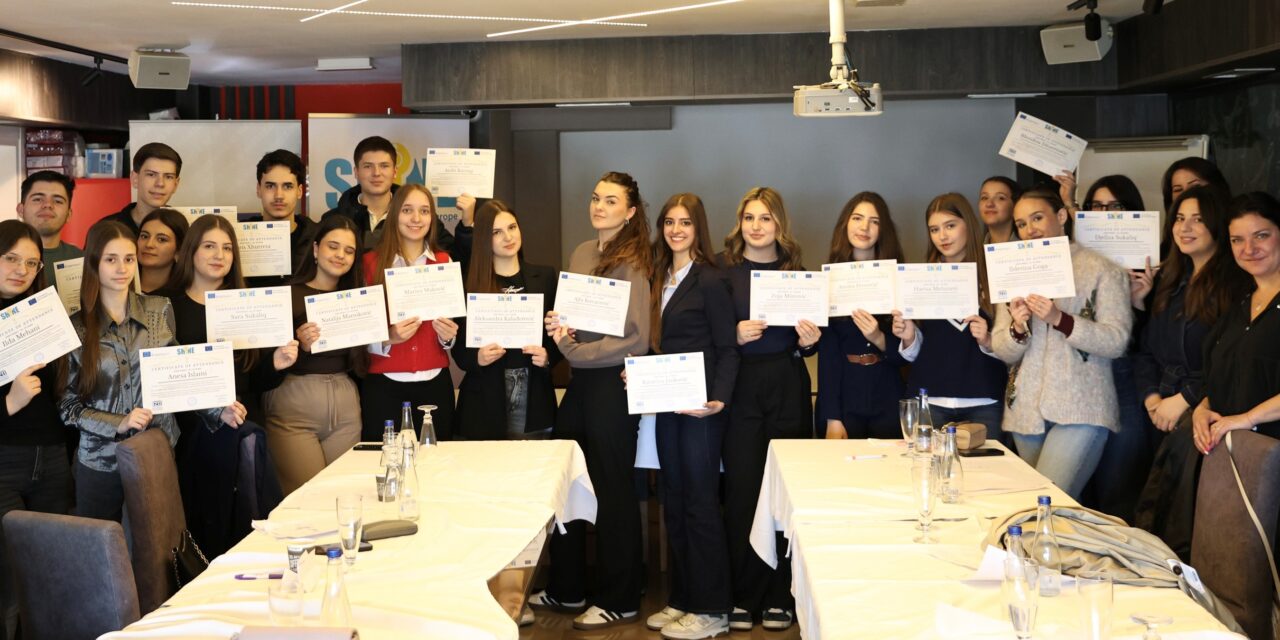
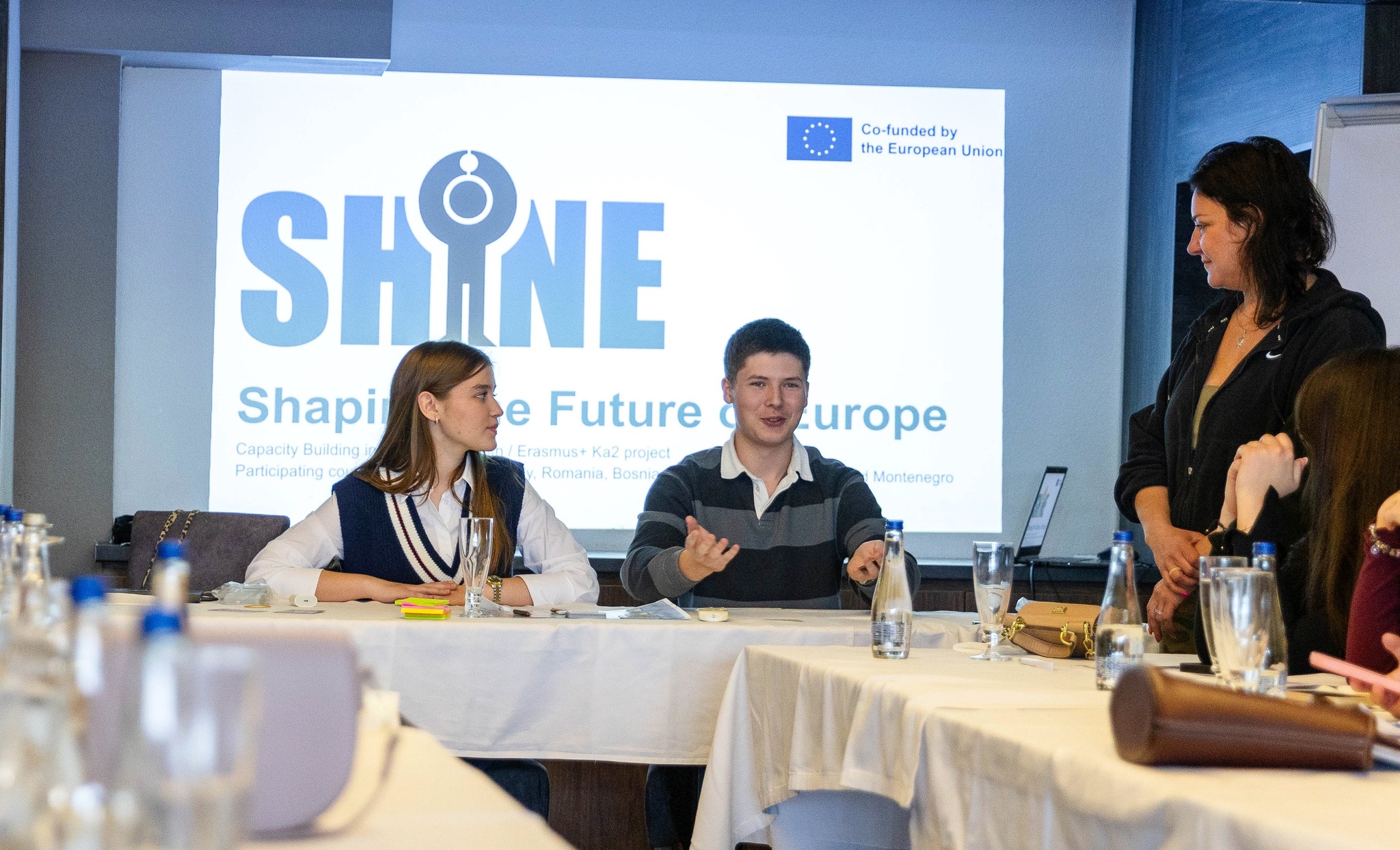
Following the successful completion of the international training for trainers within the Erasmus+ project “SHINE: Shaping the Future of Europe,” we organized a two-day local training for young people in Ulcinj, Montenegro, on 1–2 April 2026.
The training brought together 20 young participants, primarily high school students and youth activists, providing them with an opportunity to strengthen their knowledge, exchange experiences, and actively engage in discussions on key social and democratic processes. The event was designed in line with non-formal education principles, combining interactive learning methods, group work, and practical activities in a dynamic and inclusive environment.
The first day of the training focused on building a safe and collaborative learning space. Through introductory and ice-breaking activities, participants had the opportunity to get to know each other and were introduced to the SHINE project, including its objectives, expected impact, and partnership framework. This was followed by sessions exploring the concepts of democracy and active participation, where participants reflected on their own understanding and experiences.
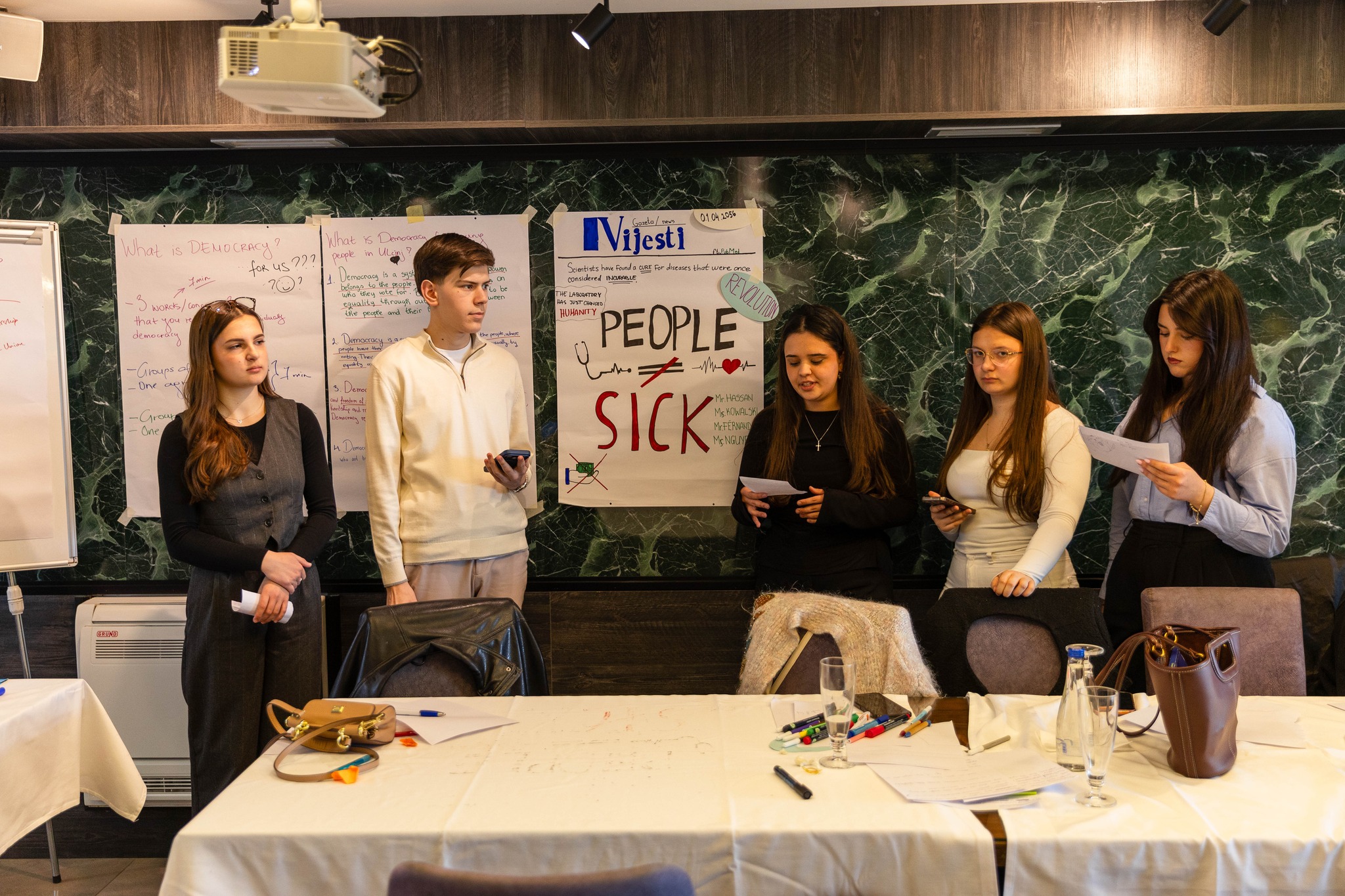
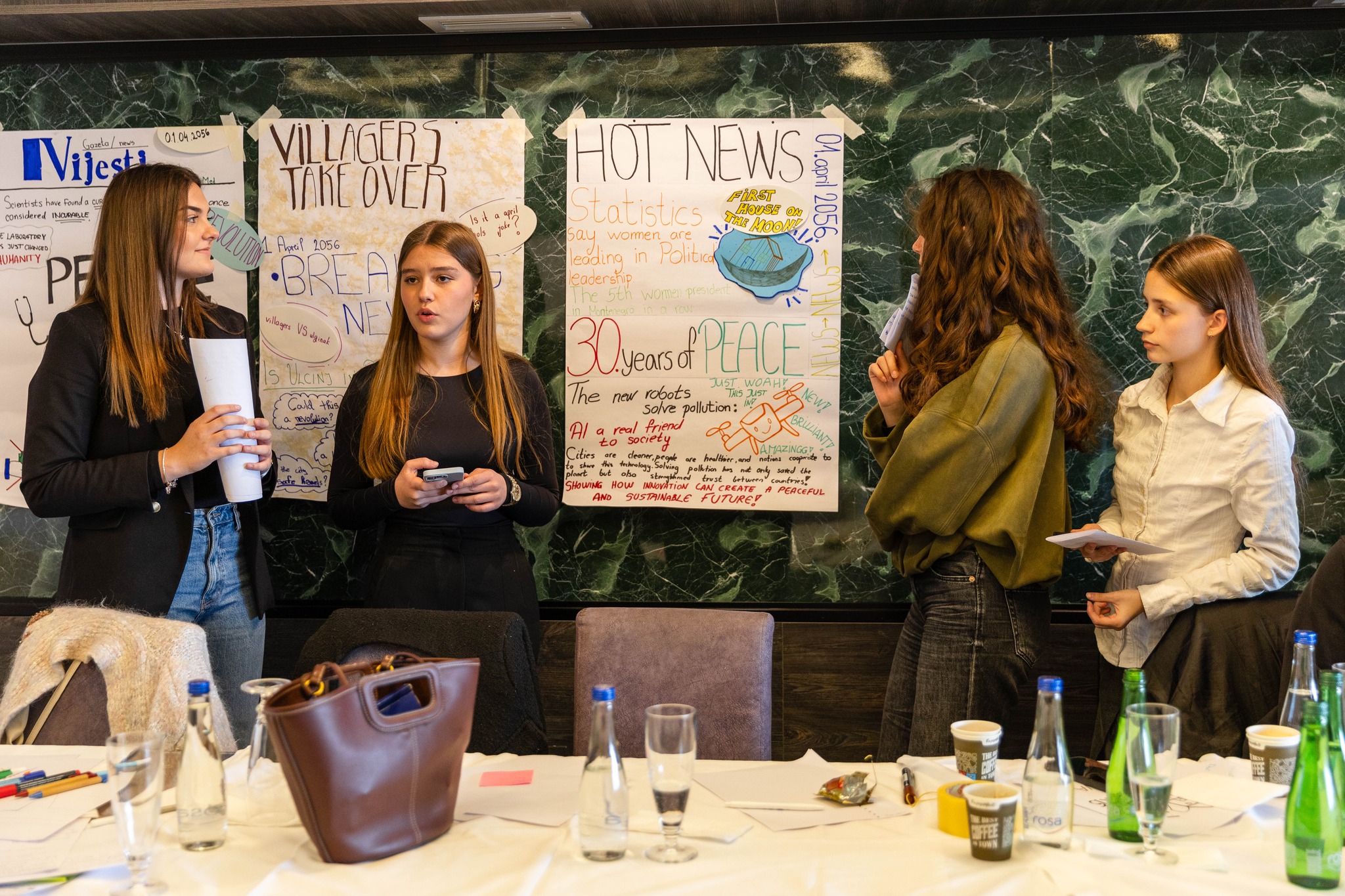
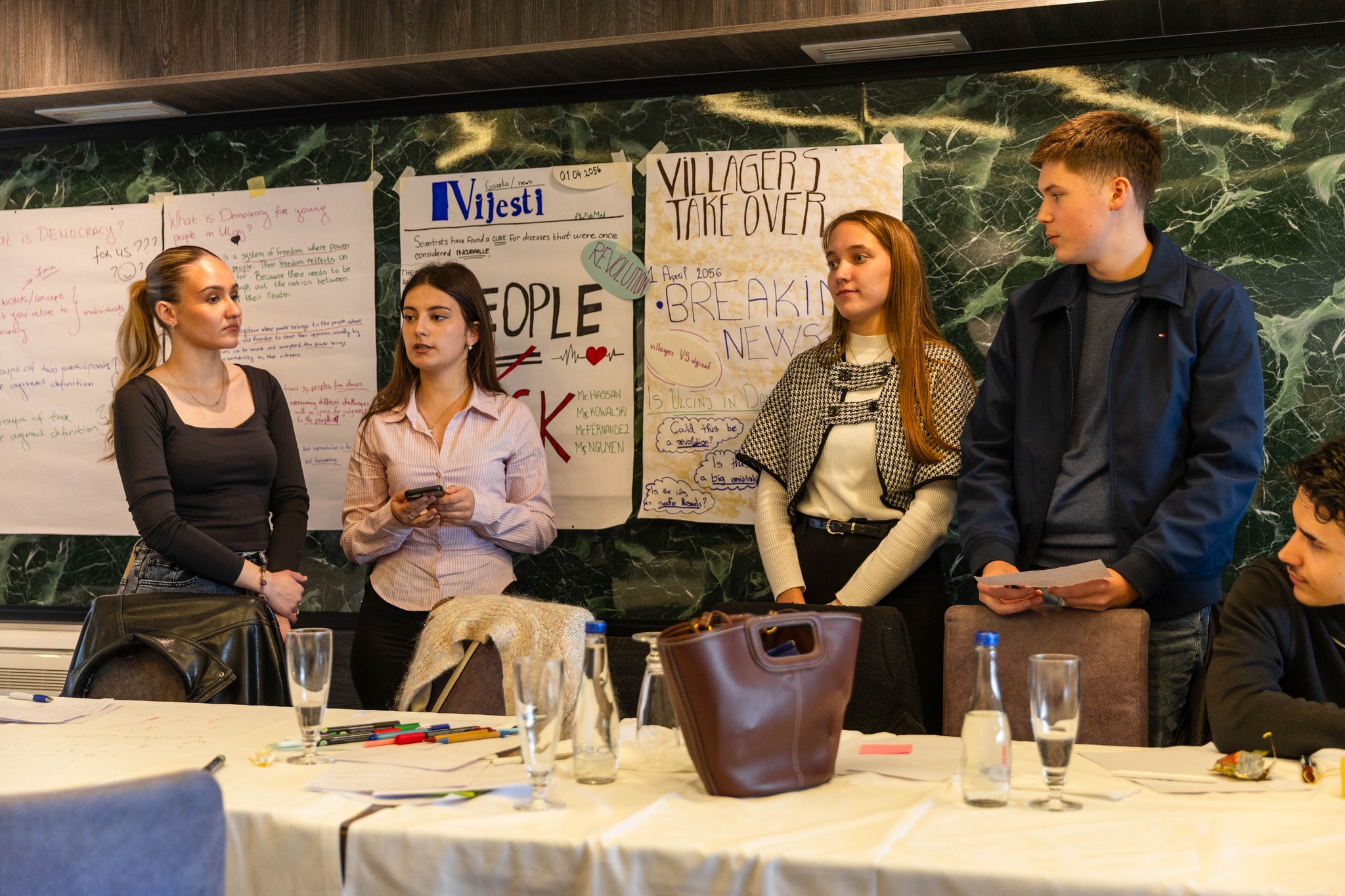
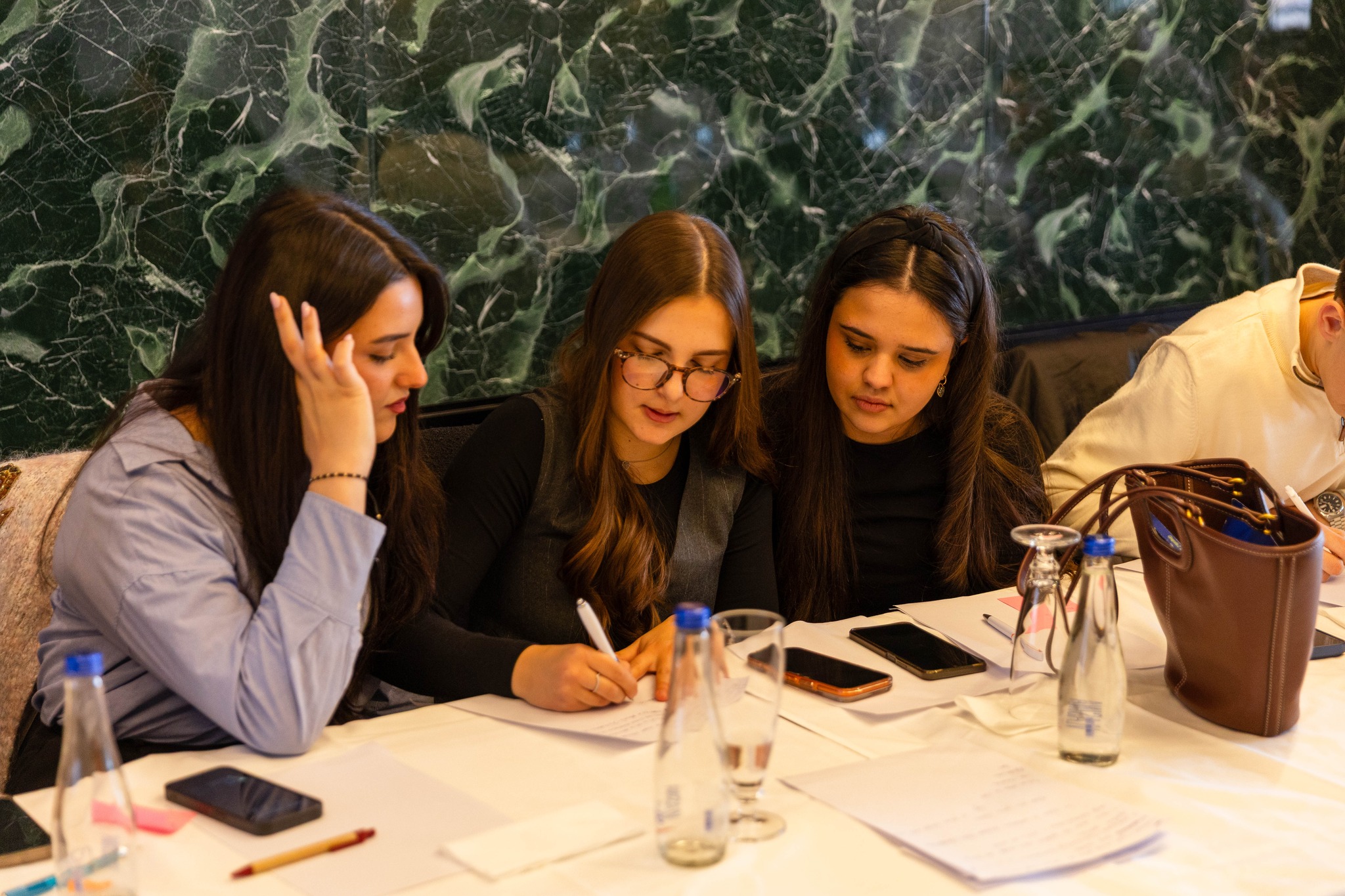
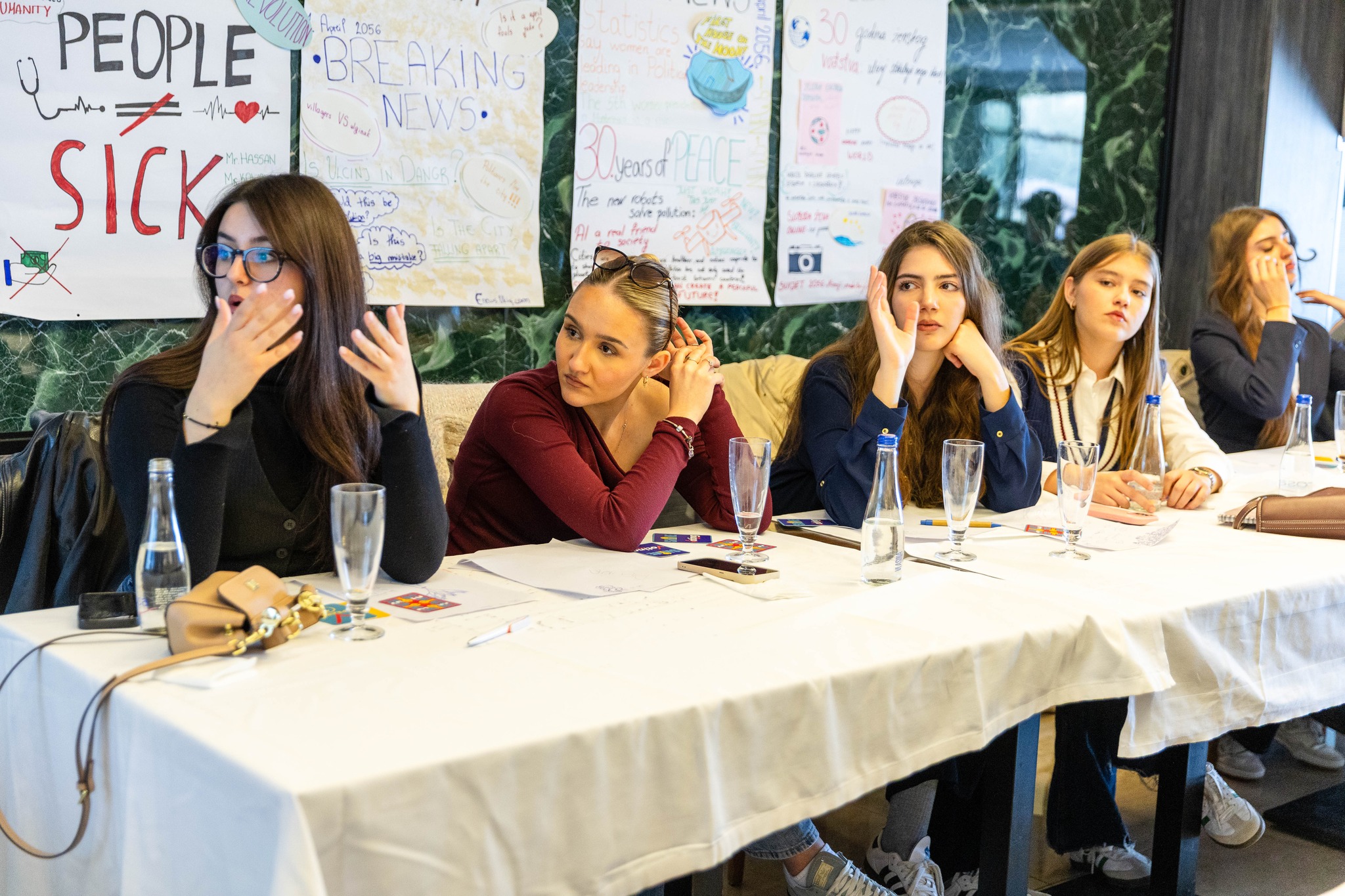
A key highlight of the day was the activity “The Future We All Want to Live In,” during which participants critically examined stereotypes and injustices present in their daily lives, particularly within the local and national context. Working in groups, they envisioned a future 30 years ahead in which these challenges had been overcome, creatively presenting their ideas through mock newspaper front pages. This exercise encouraged critical thinking, teamwork, and solution-oriented discussion.
Another interactive session, “Media Mirror: Seeing Ourselves in the News,” used role-play and theatre techniques to explore identity, stereotypes, and representation. Participants performed contrasting scenarios of inclusion and discrimination, fostering a deeper understanding of social perceptions and their impact.
The second day focused on strengthening participants’ critical thinking, communication, and decision-making skills. Through the “Electioneering” activity, participants engaged in structured debates on topics related to democracy, politics, and social media, learning to articulate their views, listen to opposing perspectives, and participate in respectful dialogue.
Creativity and collaboration were further encouraged through the “Mission Improbable: Voices in the Circle” activity, where participants collectively built a story incorporating themes of democracy, stereotypes, and societal challenges. This session stimulated imagination while reinforcing teamwork and reflective thinking.
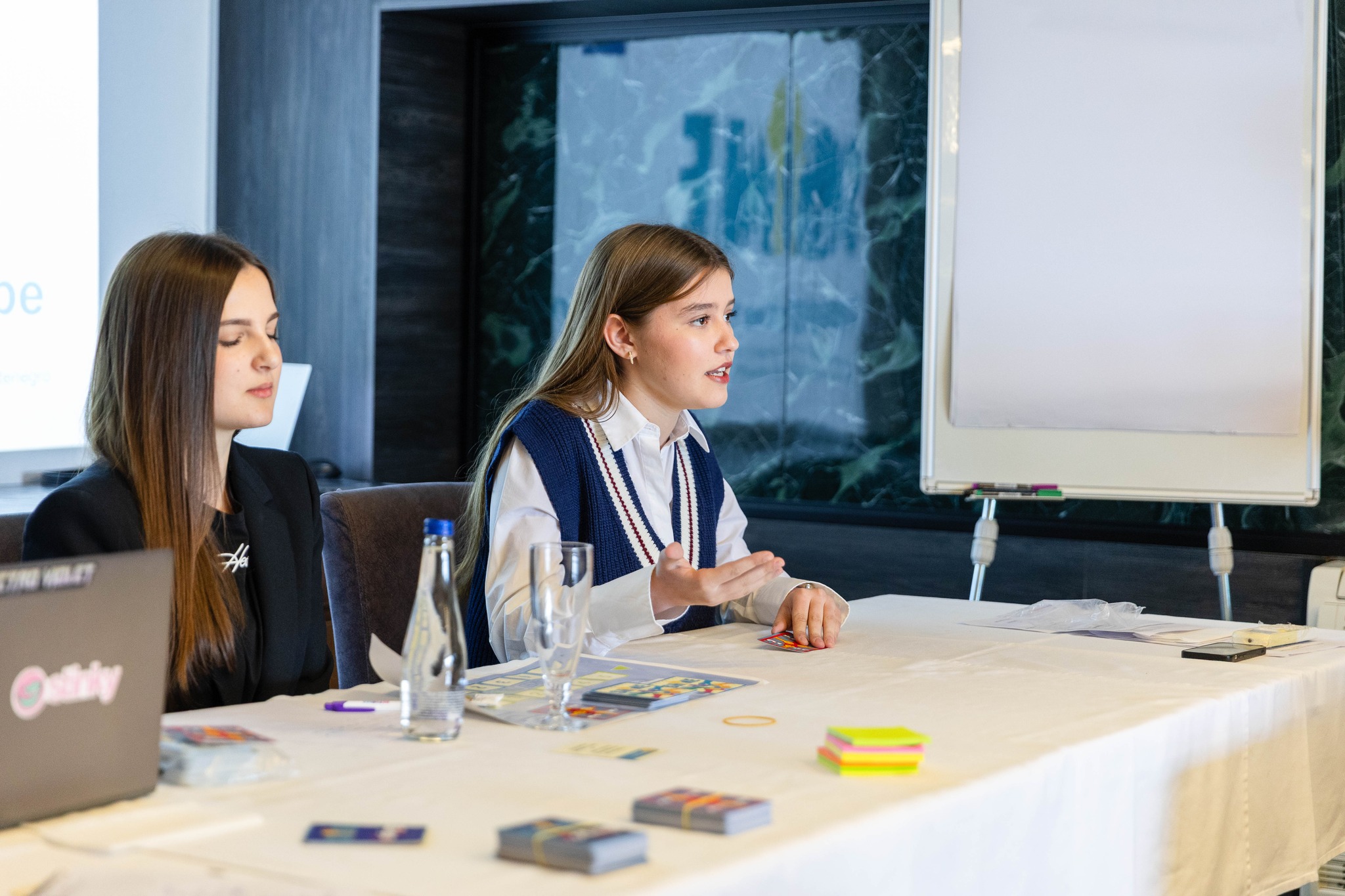
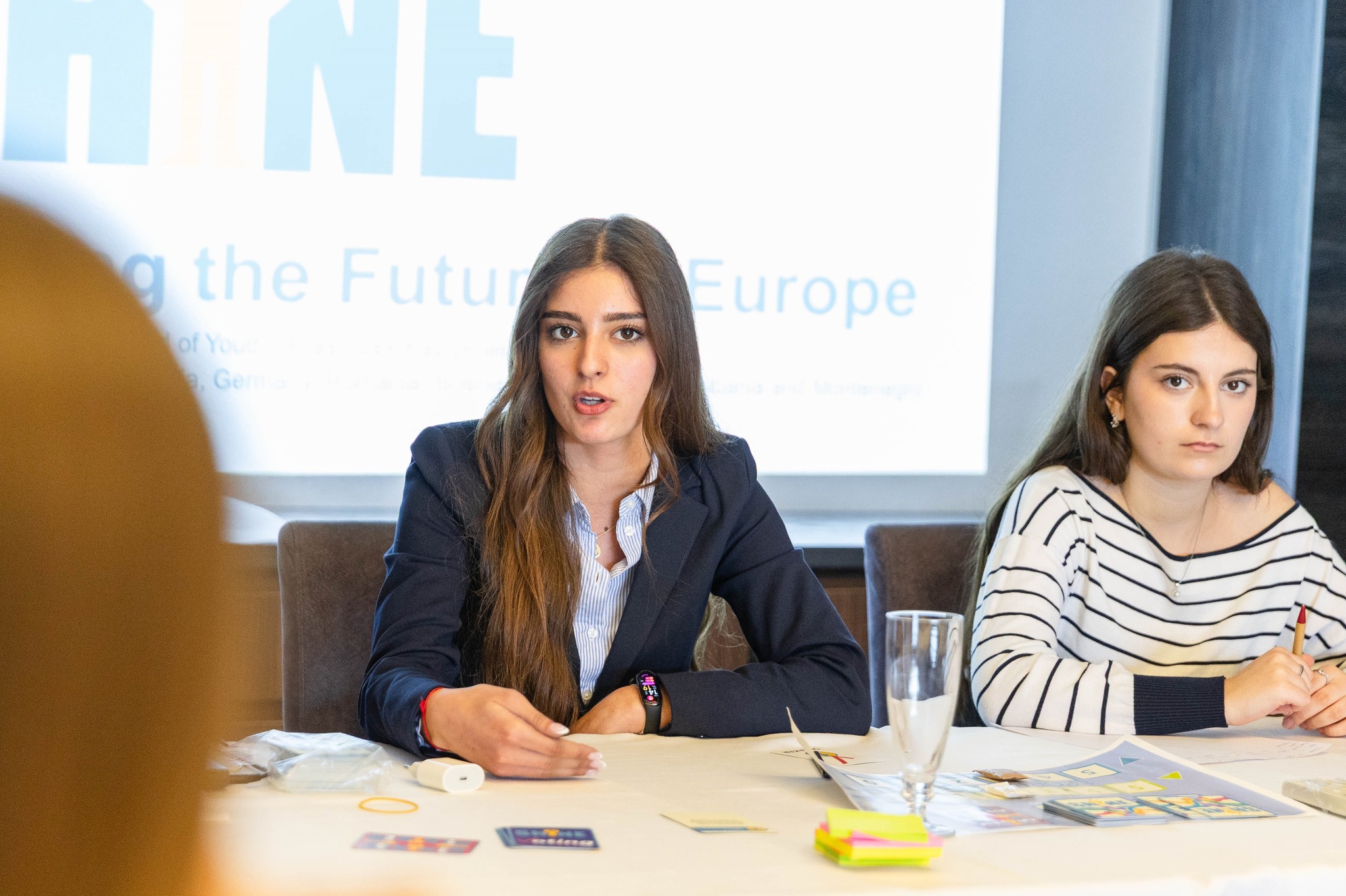
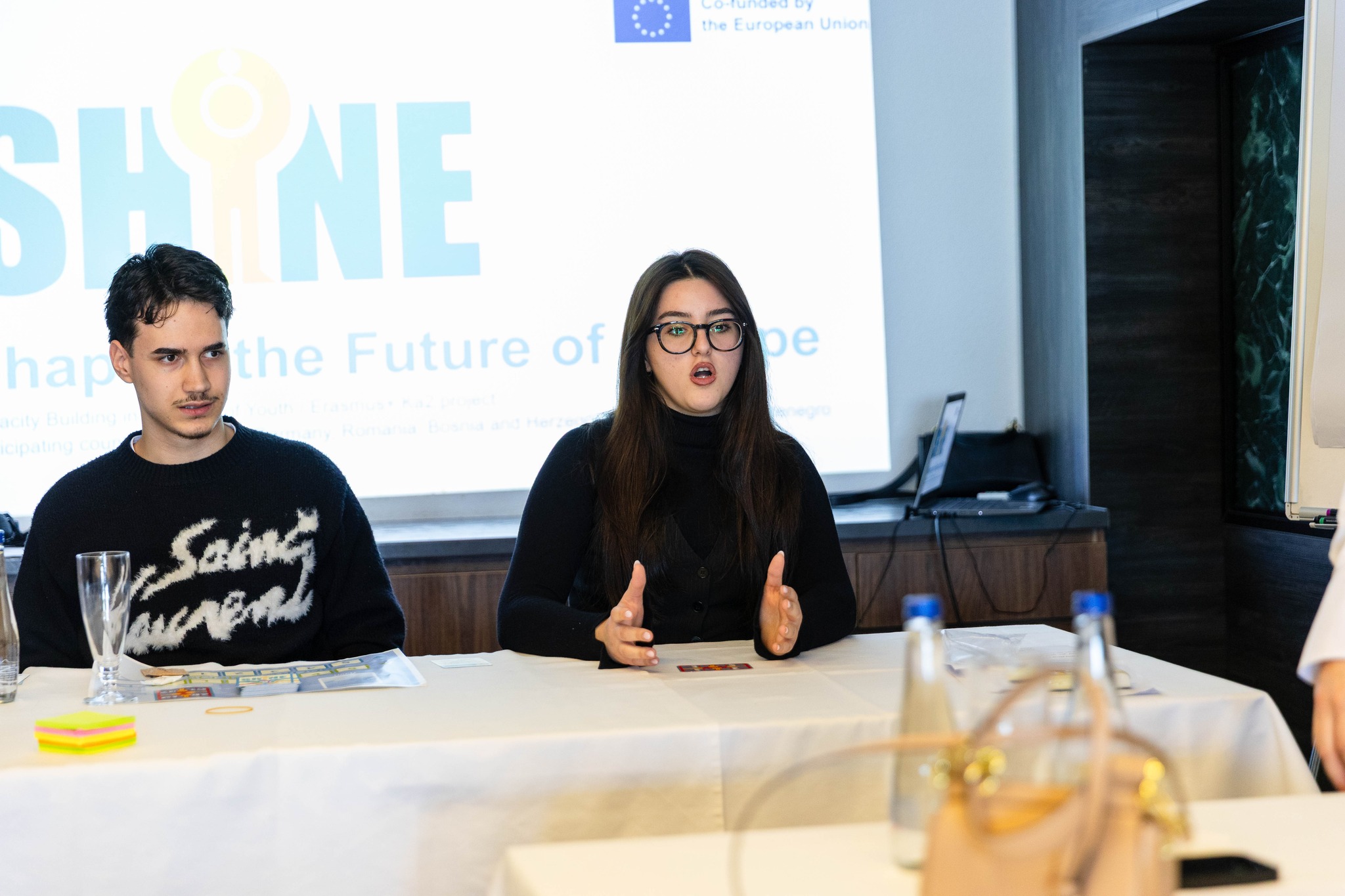
The training concluded with “The SHINE Board Game on Democracy,” an interactive simulation of democratic processes involving debate, persuasion, and voting. Through assigned roles and structured argumentation, participants gained practical insight into how democratic systems function and the importance of active participation.
Throughout the training, participants were also introduced to a handbook for youth workers developed within the project, further supporting their learning and future engagement.
At the end of the program, all participants completed evaluation forms and were awarded certificates in recognition of their active participation, engagement, and acquired knowledge.
This local training represents an important step in strengthening youth capacities at the community level and empowering young people to become active, informed, and responsible participants in democratic processes.
This activity was implemented as part of the project “SHINE: Shaping the Future of Europe,” funded by the European Union through the Erasmus+ programme.

